System Overview
Cracks and open joints are the route by which water enters an asphalt surface. Once water reaches the layers below, frost and traffic widen the defect and loosen the material on either side. Crack and joint repair closes that route before a line of damage becomes an area of damage.
The work has three parts. The defect is cleaned out, the gap is filled, and the surface around it is sealed against water. The products in this range address rebuilding and sealing.
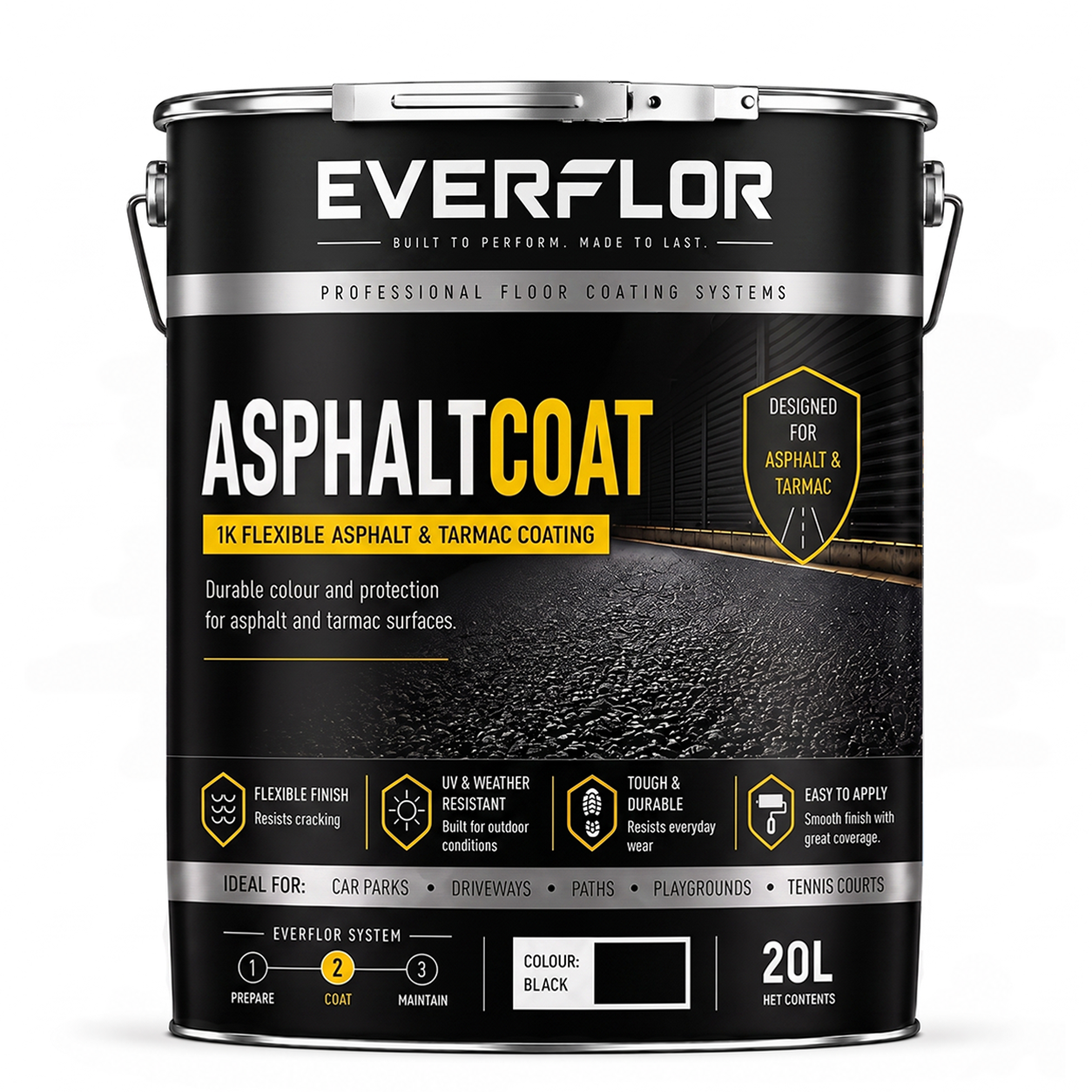
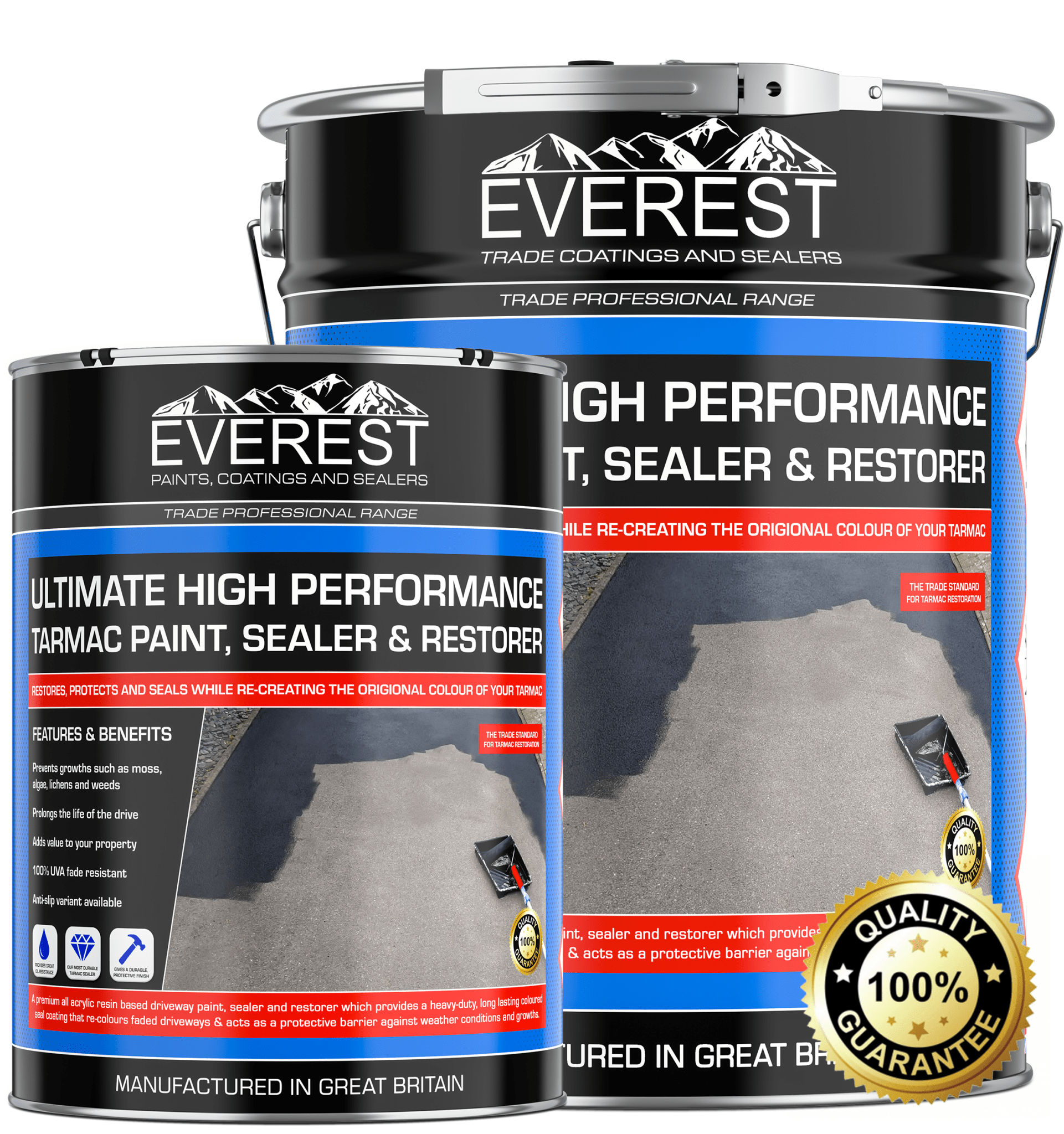
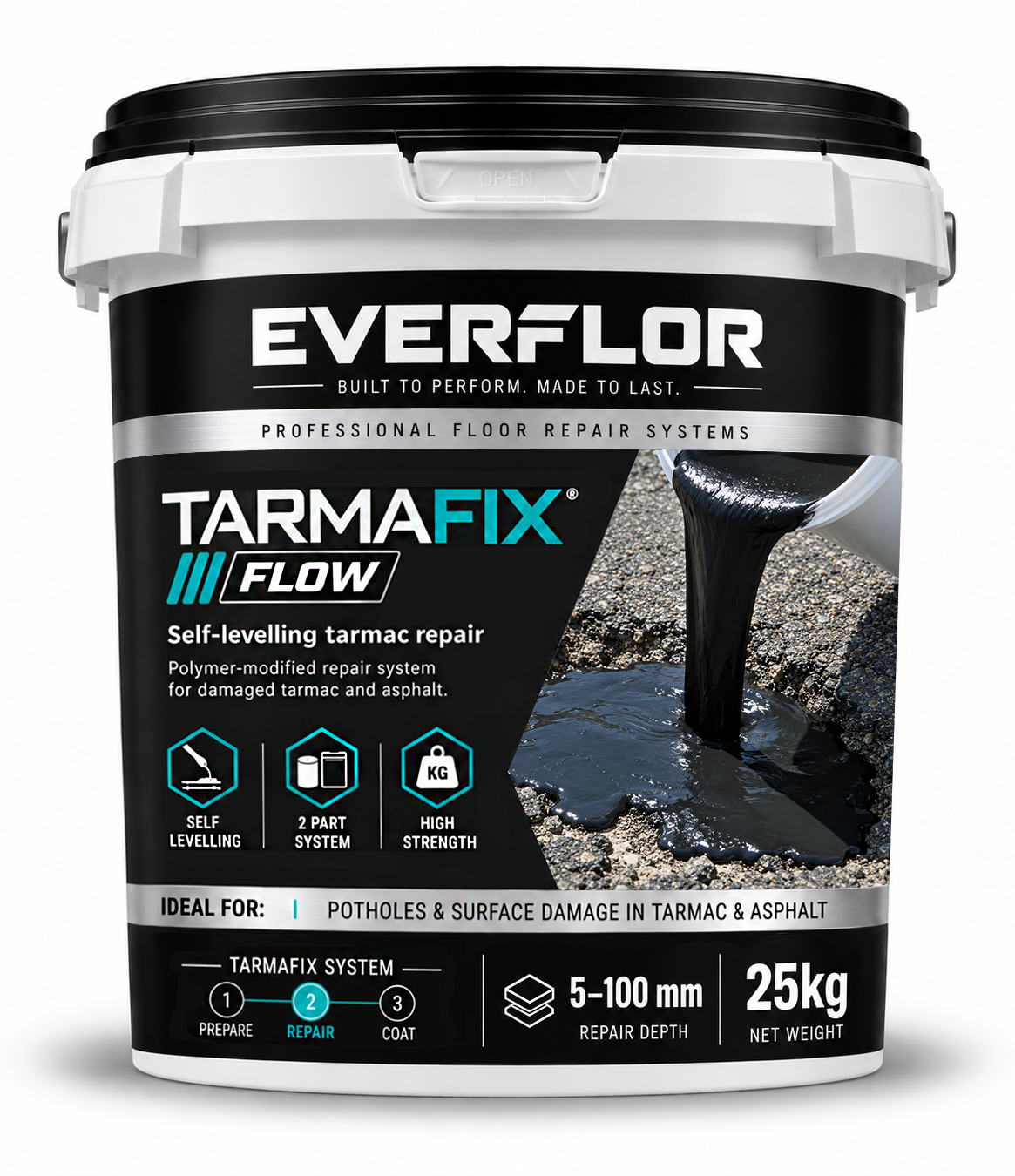
TarmaFix Flow is a pourable, fibre-reinforced polymer cement mortar. It is for potholes and worn areas, so it applies where cracking has already broken out into a hole. AsphaltCoat is a single-pack, water-based acrylic coating with a flexible, breathable film. TarmacCoat is an acrylic restorer for sealing and recolouring tired tarmac.
None of these is a dedicated crack filler or joint sealant. Open cracks and moving joints need a filler or sealant made for that purpose before any coating is applied.
Suitable Substrates & Surface Preparation
Asphalt and tarmac crack for different reasons, and the cause decides the repair. Fine surface crazing comes from age and weathering of the binder. Straight cracks often follow a construction joint or the edge of an earlier trench. Blocks of interconnected cracking point to a failing base.
Clean every crack and joint before it is treated. Remove weeds, moss, soil and loose aggregate along the full length, to the depth that can be reached. A stiff brush, a scraper and a blower are the usual tools.
The crack must be dry. Water held in a crack prevents adhesion of fillers and coatings alike. Let the surface dry after rain or washing, and treat oil or fuel staining before coating.
Where the edges of a crack have crumbled into a hole, take the loose asphalt back to firm material. That prepared hole can then be filled by pouring. Coating follows only after fillers and repairs have cured.
Performance Characteristics & Limitations
AsphaltCoat forms a film that flexes with the surface beneath it instead of cracking away from it. That matters on asphalt, which moves with temperature. The coating waterproofs hard standing as well as colouring and protecting it. Being resistant to UV and weathering, the shade resists fading.
TarmacCoat is formulated with a heavy-duty acrylic resin. It provides a durable barrier against fretting, oil stains and weed formation, and protects against aggregate loosening in high-traffic external environments. Fretting and loose aggregate are common along crack edges and joints.
TarmaFix Flow cures to a hard, dark grey cementitious repair that takes foot and forklift traffic the same day. At 20°C it is open to foot traffic after 30 minutes.
The limits are specific. A coating film seals the surface but does not fill an open crack. A crack that is still moving will show through a thin coating. A hard cementitious mortar is rigid, so it should not bridge a joint that is designed to move.
Internal vs External Considerations
Cracking in asphalt is mainly an external problem. Rain, frost, heat and sunlight age the binder, and vegetation takes hold wherever a gap collects soil. Both acrylic coatings in this range are made for external surfaces.
Carry out crack work in dry weather, on a dry surface, with no rain expected while materials cure. In cold conditions, allow longer for mortars to set and for water-based coatings to dry.
Internal asphalt floors, such as covered loading bays, crack less from weather. Load and movement at joints are the usual causes there. TarmaFix Flow is suitable for interior and exterior use on asphalt, tarmac and concrete. Internal joints that move still need a flexible joint sealant, not a rigid fill.
Selection Guidance & When to Specify Alternatives
Match the product to the defect. Fine, stable crazing on an otherwise sound surface is a sealing task. TarmacCoat is made to seal tired tarmac, and AsphaltCoat to waterproof hard standing. A crack that has broken out into a hole is a patching task for a pourable mortar.
An open crack between those two conditions needs a dedicated asphalt crack filler, and a moving joint needs a flexible joint sealant. Neither is among the products described here, so specify those materials separately. Coat over them once cured, subject to compatibility.
For isolated potholes, see the Asphalt Pothole & Hole Repair range. For recoating a whole worn surface, see the Asphalt Re-Surfacing & Screeding range.
Where cracking forms a connected block pattern, or the surface has settled along the cracks, the base has failed. Sealing will not correct that. The area should be assessed for reconstruction by a surfacing contractor.