

Short Answer
The best paint for exterior metal is oil-based gloss paint, like our Everest - Oil Based Gloss Paint.
Explanation:
You have put in the hard work. You have wire-brushed the old, flaking rust off your garden gates and sealed the steel with a high-quality Oxide Primer.
If not - check out our article on how to deal with rusted metal before painting.
Now comes the rewarding part: applying the topcoat.
When walking down the paint aisle, it is tempting to pick up a modern "quick-dry" water-based gloss. While water-based paints are fantastic for interior woodwork or walls, exterior metal is a completely different beast. Metal gates clang shut, railings are constantly grabbed, and exposed steel takes the full, brutal force of the wind and rain.
For a finish that looks professional and actually survives the elements, traditional chemistry is still king. You need a dedicated Oil-Based Gloss Paint. Here is exactly why an oil-based topcoat is the ultimate shield for your exterior metalwork.
1. Flawless Flow and Leveling
If you have ever painted a door with a cheap, fast-drying paint, you know the frustration of leaving heavy brush marks behind.
-
The Problem with Fast-Drying Paints: Water-based paints dry incredibly quickly. Once you brush them on, they start to set almost immediately, freezing your brush strokes into the finish.
-
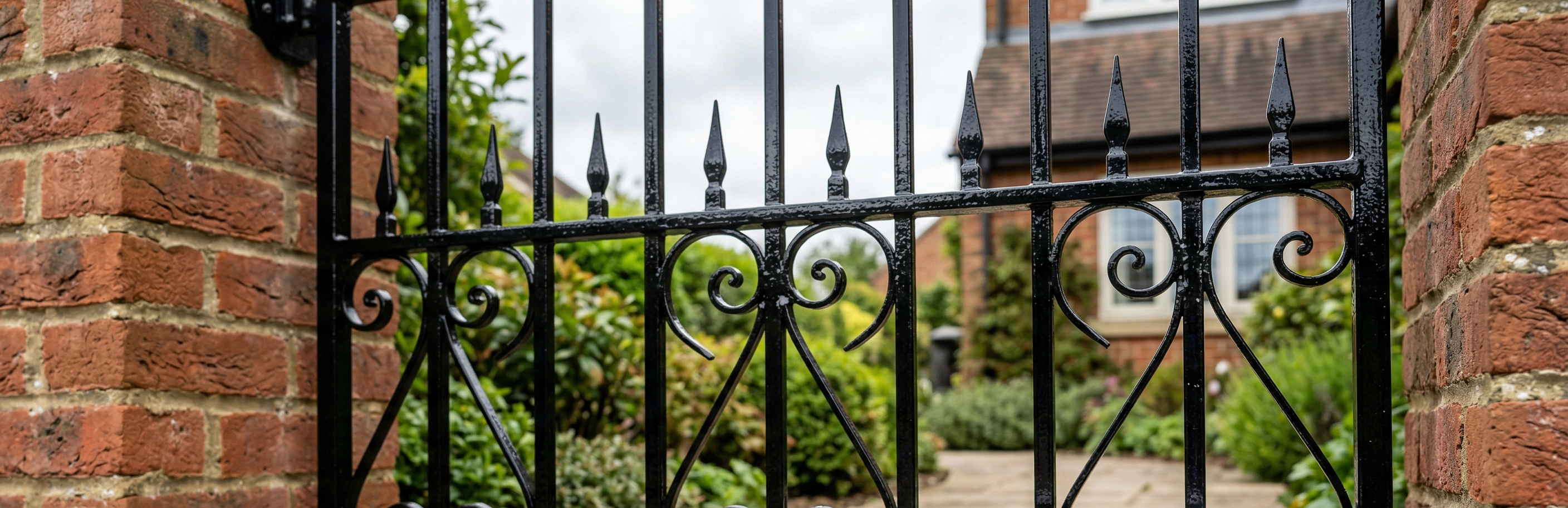
The Oil-Based Advantage: Oil-based gloss has a much longer "open time" (it dries slowly). This allows the liquid resin to relax, flow out, and level itself perfectly before it cures. The result is a smooth, glass-like, mirror finish that makes gates and railings look like they were sprayed in a factory, rather than brushed by hand.
2. The Weather Shield: Maximum Water Repellency
A high-gloss finish isn't just about looking shiny and pristine; it serves a highly functional, protective purpose.
-
The Science of Gloss: An oil-based gloss cures to form a very tight, dense surface tension. When rain hits this slick surface, it cannot sit flat or soak in. Instead, the water immediately beads up and rolls off.
-
Stopping the Rust Cycle: By rapidly shedding water and snow, the gloss prevents moisture from sitting on the metal for prolonged periods. When combined with your Oxide Primer base, this two-part system completely locks moisture out, effectively stopping the rust cycle in its tracks.
3. The Perfect Partnership (Primer + Gloss)
While some paints claim to be "all-in-one," the longest-lasting results always come from a dedicated system.
Anti-Corrosive Oxide Primer does the heavy lifting: it neutralizes the microscopic rust, bonds securely to the weathered steel, and creates a grippy, matte surface. Now, your Oil-Based Gloss acts as the impenetrable armor over the top. It bonds flawlessly to the primer, providing the colour, the shine, and the weatherproof seal.
The Honest Trade-Off
We believe in giving you the full picture. The trade-off for this incredible durability and flawless finish is time. Because it is oil-based, you will need to clean your brushes with white spirit rather than water, and you will need to allow 16 to 24 hours between coats. However, waiting an extra day for the paint to cure is a small price to pay for a finish that will last a decade.
Conclusion
Don't compromise your hard preparation work by using the wrong topcoat. Traditional oil-based gloss remains the professional standard for exterior metal for a reason: it simply performs better.
-
Flawless flow for a smooth, brush-mark-free finish.
-
High-tension gloss to repel rain and prevent rust.
-
Rock-hard durability to withstand daily knocks.
Ready to give your metalwork a professional, mirror-like finish?
→ Browse our collection of Metal Surface Paints
Share:
Best Paint for Fence Panels? Why You Need Water-Based Acrylic