

Polished concrete is often sold as the "maintenance-free" flooring option. That is a lie.
Yes, it is incredibly durable. It won't peel or flake like paint. But if you ignore it, or worse - if you clean it with the wrong chemicals - that mirror-like reflection will turn into a dull, flat grey within a year.
The shine on polished concrete isn't a wax or a coating; it is the physical rock itself, closed off and tightened by diamond tooling. To keep that shine, you have to protect the concrete's chemistry.
Here is the professional guide to deep cleaning polished concrete without chemically burning the gloss off your floor.
Throw Away the Vinegar
If you read one thing in this guide, let it be this: Never use vinegar, lemon, or acidic cleaners on polished concrete.
Many "natural cleaning" blogs recommend vinegar. On concrete, this is disaster. Concrete is calcium-based. Vinegar is acid. When they meet, the acid dissolves the calcium. It literally eats the surface of your floor on a microscopic level.
-
The Result: "Etching." You will see dull, rough patches where the shine has been chemically erased. You cannot clean an etch away; you have to mechanically re-polish it.
Avoid Heavy Degreasers (Unless Necessary)
On the other end of the scale, high-pH Industrial Degreasers can also be dangerous. While they won't etch the concrete, highly alkaline cleaners can strip the "Stain Guard" (the invisible penetrating sealer) that protects the pores. If you strip that guard, your floor becomes thirsty and will start staining from spills. They also tend to leave a "residue haze" that dulls the reflection.
The Solution: The Neutral Clean
For 99% of your maintenance, you need a pH Neutral Floor Cleaner. These cleaners are designed to lift soil without reacting with the calcium in the floor or stripping the sealer.
Step 1: Dust Mop
The biggest enemy of shine is grit. Sand and dirt brought in from outside act like 120-grit sandpaper under your shoes. Every step scratches the polish. You must dry-mop or vacuum the floor daily to remove this abrasive grit before you wet clean.
Step 2: The Wet Clean
-
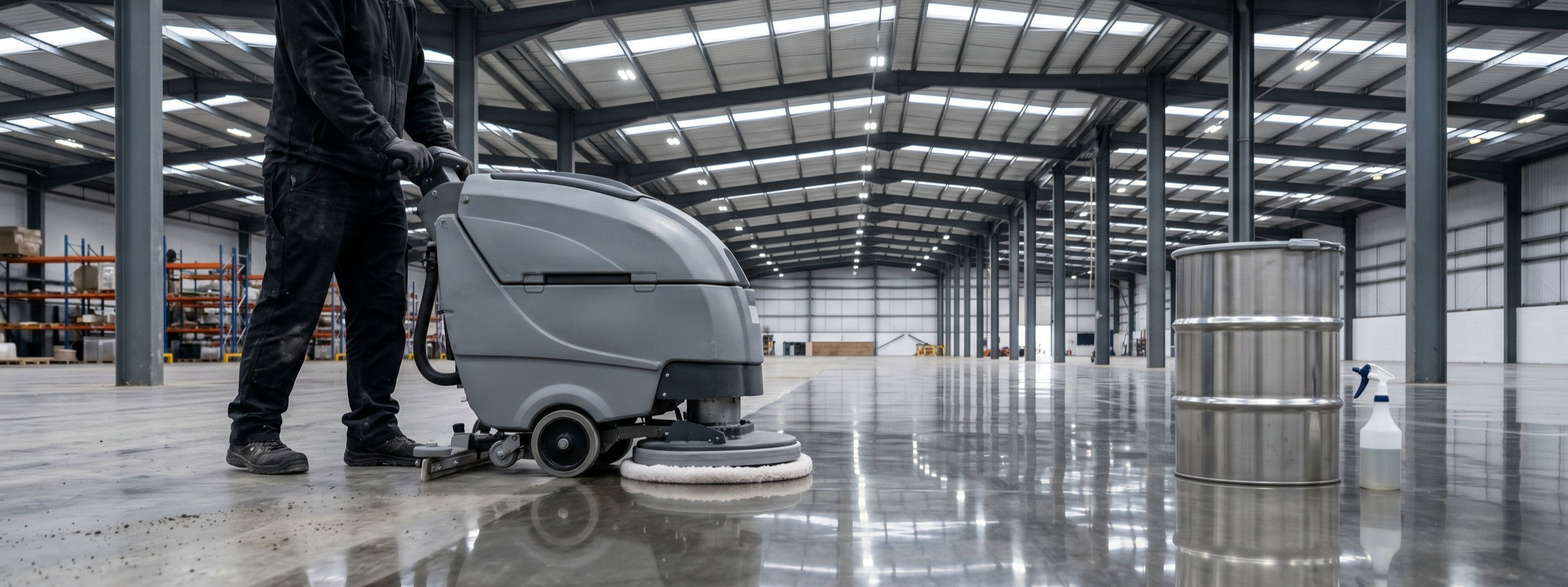
For Machines: Use an auto-scrubber with a White or Beige Pad.
-
Warning: Never use a Black or Green stripping pad. These are designed to strip wax and will scratch your polish immediately.
-
For Mops: Use a microfiber mop. Cotton mops just push dirt into the grout lines.
Step 3: The Burnish
Sometimes, the floor is clean, but the "pop" is gone. This happens because the microscopic peaks of the concrete have been worn down by foot traffic. You don't need more chemicals; you need friction.
Using a high-speed floor burnisher with a diamond-impregnated "hog hair" pad heats up the surface and re-tightens the pores. This restores the gloss mechanically.
Emergency Stain Removal
If you spill oil or wine, pH Neutral Cleaner might not be strong enough. You have to break the rules carefully.
-
Oil/Grease: Use a specific Concrete Degreaser only on the spot. Let it dwell for 10 minutes to pull the oil out, then rinse thoroughly with water to neutralize the high pH.
-
Acidic Spills (Wine/Juice/Soda): Wipe them up immediately. The longer they sit, the deeper they etch. If the floor feels rough after cleaning, the acid has already etched it. You may need a "polished concrete guard" product to fill the pores back in.
Conclusion
Polished concrete is like a diamond ring. It is hard, but if you want it to sparkle, you have to keep it clean.
Don't use harsh chemicals hoping for a deeper clean. You will just damage the surface profile. Stick to a high-quality pH Neutral Floor Cleaner, keep the grit off the floor, and your shine will last for decades.
Share:
Acid vs. Alkaline Concrete Cleaners: Which is Best for Your Floor?
Restoring Block Paving: Removing Moss, Weeds, and Lichen