

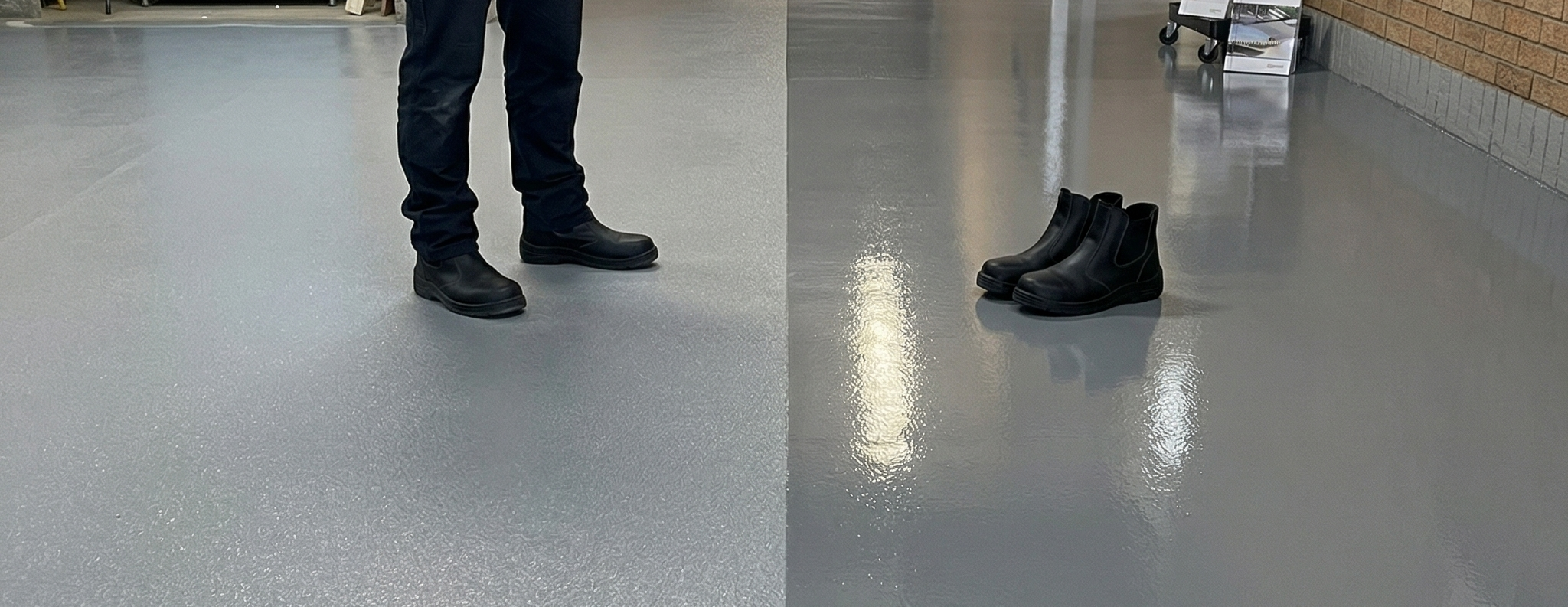
Bien que la finition ultra-lisse. Pour remédier à cela, vous devez introduire un agrégat antidérapant spécialisé dans la couche de peinture finale. Cela augmente le coefficient de frottement (CoF), offrant une « adhérence » pour les chaussures et les pneus. La clé est de choisir le bon matériau – allant de billes douces et faciles à nettoyer pour les cuisines à du carbure de silicium ultra-dur pour les rampes de chariots élévateurs – afin d'équilibrer sécurité et facilité d'entretien.
-
Adhérence mécanique : Les additifs antidérapants créent des « pics » microscopiques qui brisent la tension superficielle des liquides, empêchant ainsi l'aquaplanage.
-
Choix des matériaux : L'utilisation d'un mauvais grain (par exemple, du sable) peut entraîner un « écaillage », où l'adhérence se détache de la peinture ; des additifs spécialisés comme le silicate d'aluminium sont conçus pour rester fixés dans la résine.
-
Compromis de nettoyage : Plus l'adhérence est forte, plus le sol est difficile à nettoyer. Il est essentiel de trouver le « juste milieu » pour votre environnement spécifique.
La physique du glissement : pourquoi les sols lisses échouent
Lorsque vous appliquez un revêtement à forte épaisseur comme un époxy ou un polyuréthane, le liquide s'écoule dans les « creux » du béton, nivelant parfaitement la surface. Bien que cela donne un aspect professionnel et soit facile à nettoyer, cela élimine la texture nécessaire à l'adhérence.
Lorsqu'un liquide (eau, huile ou même poussière fine) se dépose sur cette surface lisse, il crée une barrière entre la chaussure et le sol. Sans agrégat pour percer ce film liquide, toute adhérence mécanique est perdue. En ajoutant un « grain » spécifique à votre couche de finition, vous créez efficacement une carte topographique de pics de sécurité qui restent au-dessus du niveau du liquide.
Choisir la bonne « accroche » : notre gamme antidérapante
Toutes les « accroches » ne se valent pas. Utiliser un grain de qualité chariot élévateur dans un chenil le rendra impossible à nettoyer, tandis qu'utiliser une légère accroche de cuisine sur un quai de chargement entraînera l'écrasement immédiat de l'agrégat.
1. EverFlor - HD Safety Grip (le tout-terrain)
C'est notre choix standard pour la plupart des garages industriels et domestiques. Fabriqué en silicate d'aluminium, il est nettement plus résistant que le sable standard.
-
L'avantage : Il offre une résistance élevée aux chocs et est disponible en version Fine (pour le trafic piétonnier) et Grossière (pour les rampes plus raides ou les zones humides).
-
Idéal pour : Garages domestiques, ateliers et petites unités commerciales.
→ Acheter EverFlor - HD Safety Grip
2. EverFlor - Ultra Grip (Le spécialiste des chariots élévateurs)
Dans les zones avec des machines lourdes, la « charge roulante » d'un chariot élévateur peut en fait écraser ou « étaler » des agrégats plus doux.
-
L'avantage : Fabriqué en carbure de silicium, c'est notre additif le plus résistant. Il est le plus grossier et ne se déforme pas sous la pression extrême des pneus en caoutchouc plein ou des transpalettes lourds.
-
Idéal pour : Centres de distribution, fabrication lourde et rampes de chariots élévateurs.
→ Acheter EverFlor - Ultra Grip
3. EverFlor - Easy-Grip (Le choix hygiénique)
Plus l'adhérence est agressive, plus elle « déchire » les serpillières et emprisonne la saleté. Easy-Grip utilise une géométrie différente pour assurer la sécurité sans bords tranchants.
-
L'avantage : Faible granulométrie et conçu pour rester en suspension dans le pot de peinture presque indéfiniment (ce qui signifie qu'il ne coulera pas au fond pendant que vous peignez).
-
Idéal pour : Cuisines, chenils et toute zone nécessitant un nettoyage hygiénique régulier tout en devant respecter les normes de sécurité pour le trafic piétonnier.
→ Acheter EverFlor - Easy-Grip
4. SummitSeal - Invisi-Grip (Pour les scellants transparents)
Si vous avez un magnifique sol en béton poli ou un système de flocons décoratifs, vous ne voulez pas qu'un grain gris ou blanc ruine l'esthétique.
-
L'avantage : Chimiquement identique à l'Easy-Grip mais spécifiquement commercialisé pour une utilisation dans les scellants transparents. Il est pratiquement invisible une fois durci, offrant une sécurité « furtive ».
-
Idéal pour : Planchers intérieurs décoratifs, espaces de vente au détail et salles d'exposition avec revêtement transparent.
→ Acheter SummitSeal - Invisi-Grip
Conseils d'application : Comment éviter une adhérence « inégale »
La plainte la plus fréquente en matière de dépannage est que l'adhérence est « agglomérée » dans certaines zones et absente dans d'autres.
La règle de la suspension : La plupart des agrégats (en particulier le carbure de silicium lourd dans Ultra Grip) ont tendance à couler au fond de votre seau de peinture. Vous devez remuer votre peinture fréquemment pendant l'application – pas seulement au début. Pour Easy-Grip et Invisi-Grip, c'est moins un problème, mais un rapide mélange toutes les 10 minutes reste la meilleure pratique.
La méthode « Éparpiller » versus « Mélanger » :
-
Mélanger : Pour la plupart des bricoleurs, mélanger directement le grain dans la couche finale de peinture et l'appliquer au rouleau est le moyen le plus simple d'obtenir une finition uniforme.
-
L'épandage (ou « broadcast ») : Pour une adhérence maximale, les professionnels « épandent » le grain à la main sur une première couche humide, le laissent sécher, balaient l'excédent, puis le fixent avec une seconde couche de finition « fine ». C'est plus difficile mais cela offre la plus haute résistance au glissement possible.
Compromis honnêtes : sécurité vs entretien
Le conflit du nettoyage : Vous ne pouvez pas avoir un sol qui soit à la fois « adhérence maximale » et « facile à nettoyer ». Si vous choisissez Ultra Grip, vous aurez probablement besoin d'une brosse à pont ou d'une autolaveuse pour nettoyer le sol. Si vous choisissez Easy-Grip, une serpillière standard fonctionnera bien, mais ce ne sera peut-être pas suffisant pour un atelier mécanique graisseux.
Le facteur d'usure : L'antidérapant est une couche sacrificielle. Après des années de trafic intense, les « pics » du grain finiront par s'user. Dans les passages très fréquentés ou les « zones de virage » des chariots élévateurs, vous devrez peut-être appliquer une nouvelle « couche d'adhérence » tous les 2-3 ans pour maintenir votre indice de sécurité.
Le changement visuel : L'ajout d'un agrégat ternira toujours légèrement le brillant d'une peinture de sol. Si vous recherchez une « finition miroir », un additif antidérapant adoucira ce reflet pour lui donner un aspect plus satiné.
Partager:
Époxy bi-composant durci trop vite ? Comment gérer la durée de vie en pot
Problèmes d'adhérence sur les sols autonivelants et surfacés au béton lissé