Fabriqué en Grande-Bretagne

Directement de notre usine

Livraison gratuite le lendemain

Pour toute commande supérieure à 750 £

Résultats du test produit

Tous les résultats des tests publiés

Conseils techniques d'experts

Appelez ou discutez avec notre équipe

One Coat. Full Film Thickness.

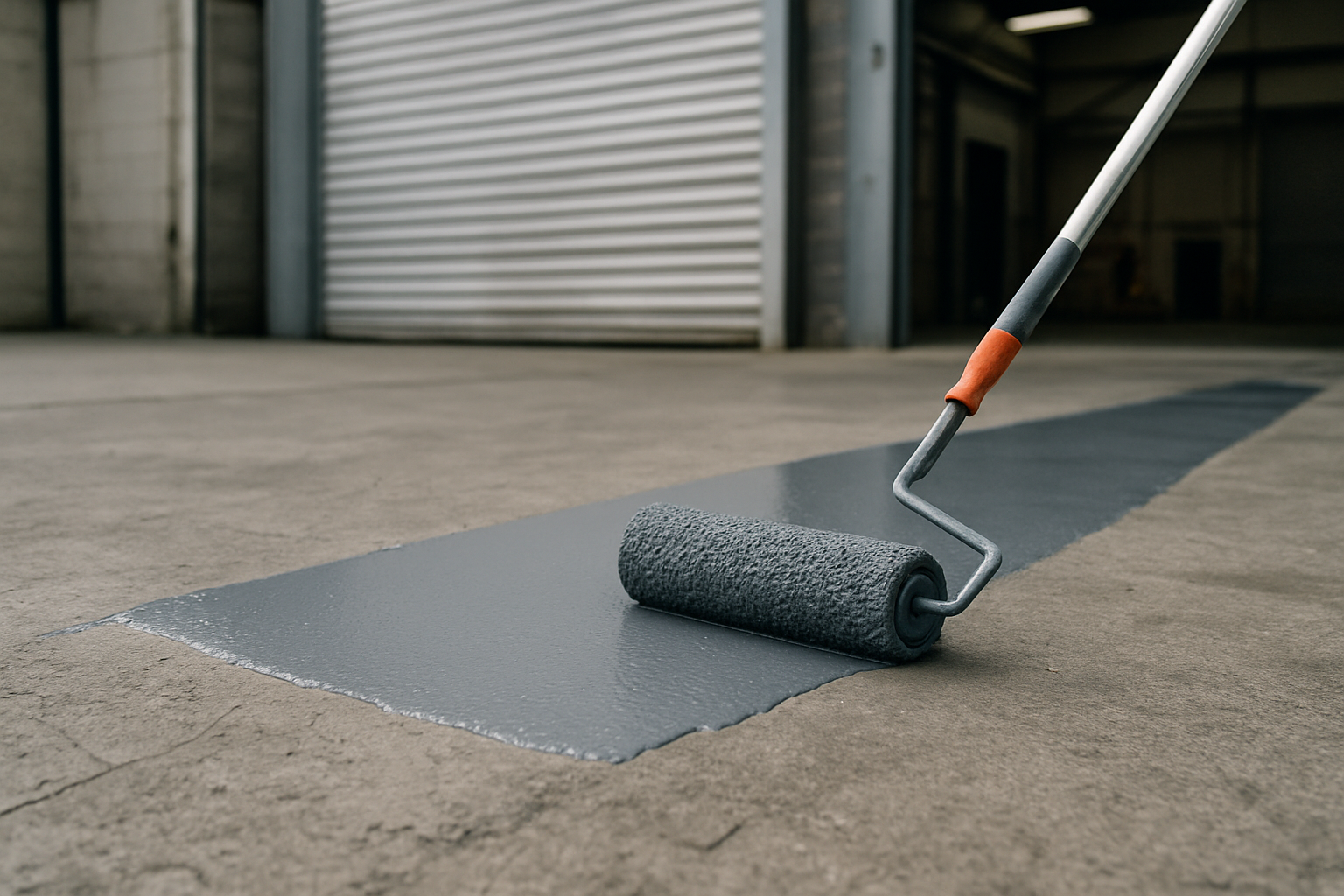
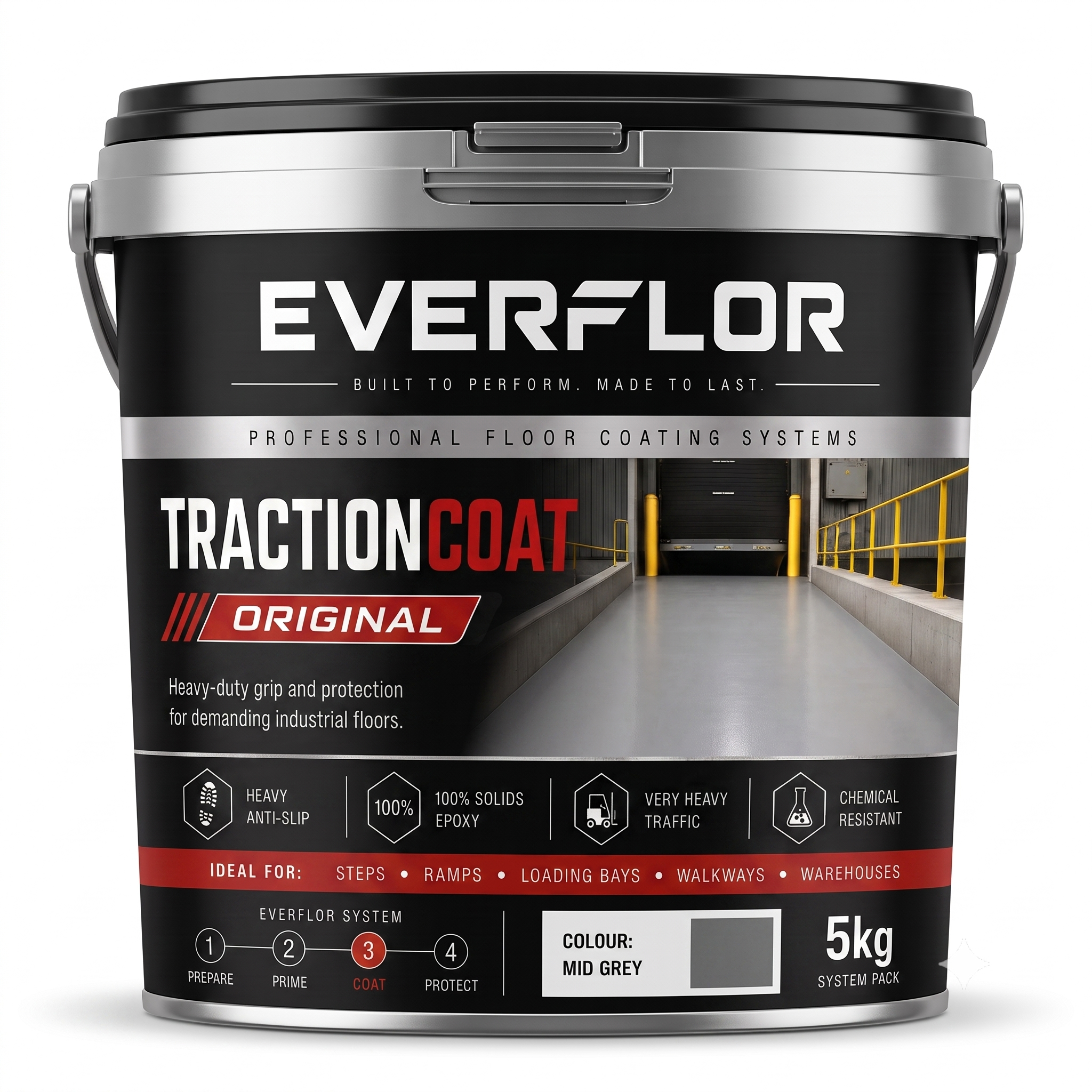
Concrete floors go smooth long before they go bad. Years of foot traffic polish the surface, and a thin decorative coating only makes it slicker. Ordinary paints thin out further as their solvent leaves, so the film that dries is a fraction of what was laid, and porous concrete drinks the rest. TractionCoat Original carries no solvent at all: at 100% solids, the 220 microns rolled on stays 220 microns once cured, and the texture stays proud in the film. That is a single coat, laid with a brush and a roller, cured hard overnight at 20°C.
Cliquez sur une icône pour explorer les fonctionnalités Appuyez sur une icône pour explorer les fonctionnalités

Two-Part Chemical Cure

Mix the base and hardener at 3.55:1 and the film cures by chemical reaction, not by drying. Pot life is 30 minutes at 20°C, so mix only what you can lay in that window. Recoat after 10 hours at 20°C, with full cure at 16 hours. Keep unmixed containers out of direct sunlight and hot areas, as heat shortens pot life.

Zero Shrinkage Film

The resin is 100% solids, so nothing is lost to evaporation as the coating cures. A 220 micron wet film stays a 220 micron dry film. Two coats build the full thickness without solvent voids or sinkage.

Textured Traction Film

The film cures with a textured gloss surface rather than a smooth one, so the coating keeps traction underfoot. Lay it by brush or roller in one coat at 220 microns. No thinning is used, so the texture and the film build arrive together in a single pass.

Substrate And Temperature Window

Prime bare concrete before coating; see the Application section. Over well bonded paint and some metals, apply the mixed epoxy direct. Work between 12°C and 30°C, and keep the coating out of UV until it has fully cured, as early exposure makes discolouration more likely.

Profil de performance

Professional Grade Two-Pack 100% Solids Epoxy. Supplied as resin and hardener at 3.55 : 1, laid in one coat at 220 microns by brush or roller. With no solvent to evaporate, the wet film and the dry film are the same thickness. Cure is chemical, taking 16 hours at 20°C.

Télécharger la fiche technique
Coverage 18m²per 5kg, one coat
Pot Life 30 minutesat 20°C
Solids Content 100%no evaporation loss
Film Thickness 220 micronswet and dry

Informations essentielles

Détails du produit

Description

EverFlor TractionCoat Original is a two-part epoxy floor coating supplied as a resin and a hardener, mixed at 3.55 : 1 immediately before use. The cured film is textured and gloss. It is designed to be laid in a single coat by brush or roller on concrete, well bonded paint and some metals, inside or out.

The formulation is 100% solids. Nothing is lost to evaporation as it cures, so the 220 microns applied wet remain as 220 microns of dry film. That is what gives one coat its build, and it is why the coating does not need thinning — the material goes on as supplied.

Cure is by chemical reaction between the two components rather than by drying, so the film hardens in 16 hours at 20°C without relying on ventilation. Pot life is 30 minutes at 20°C, which sets the working rhythm: mix a full unit, lay it, then mix the next.

Recommended areas of use

  • Interior and exterior concrete floors
  • Existing floor paint that is sound and well bonded
  • Some metal surfaces, subject to an adhesion trial
  • Floors where a coarse, high-build texture is wanted underfoot

Features

  • 100% solids epoxy, so the applied wet film thickness is retained in full as dry film
  • Single coat application at 220 microns, cutting labour and site time
  • Textured gloss finish for grip underfoot on smooth or worn concrete
  • Cures in 16 hours at 20°C by chemical reaction, not by solvent release
  • Covers 18m² per 5kg, so unit counts are simple to work out from floor area
  • Applied by brush or roller with no thinning and no site adjustment
  • Suitable for interior and exterior floors, with an application window of 12-30°C
  • 24 month shelf life in unopened containers

Good to know

Bare concrete must be primed before coating; see the Application section. Mixed material has a 30 minute pot life at 20°C and heat shortens it, so keep full containers out of direct sunlight and away from hot areas before use. Where a further coat is applied, do so within 48 hours at 20°C. If the coating is exposed to UV before it has fully cured, discolouration is more likely. The minimum application temperature is 12°C. Applicators cannot practically be cleaned and should be discarded after use.

Application

SURFACE PREPARATION

The floor must be clean, dry and structurally sound before you start. Remove dust, laitance, dirt, oil and grease. Take back any paint that is not firmly bonded, and make good defects in the concrete. Bare concrete needs a primer; prime the area and allow it to take up before coating. Trial adhesion on metal substrates before committing to the full area.

MIXING

Mix the resin and hardener at 3.55 : 1. Always mix a full unit — the ratio cannot be split accurately on site. Stir to a single uniform colour, working the sides and base of the container so no unmixed resin is left behind. Do not thin the material. Keep containers out of direct sunlight and away from hot areas before use, as warm material has a shorter pot life.

APPLICATION

Apply one coat. Cut in edges and detail with a brush and roll the open floor. Lay the material at 220 microns wet and keep a wet edge between passes. Place mixed material within 30 minutes at 20°C. Apply between 12°C and 30°C; do not coat below 12°C. Applicators cannot practically be cleaned, so discard them once the work is done.

CURING AND OVERCOATING

The film cures in 16 hours at 20°C. Cure is a chemical reaction between the two components, so it does not depend on ventilation or humidity. Where a further coat is required, apply it within 48 hours at 20°C. Protect the fresh film from UV until it has fully cured, as early sunlight exposure makes discolouration more likely.

Couleurs disponibles
  •  
    Noir (RAL 9005)
  •  
    Gris Anthracite (RAL 7016)
  •  
    Gris Moyen (RAL 7001)
  •  
    Gris clair (RAL 7035)
  •  
    Blanc signalisation (RAL 9003)
  •  
    Jaune sécurité (RAL 1023)
  •  
    Vert de sécurité (RAL 6032)
  •  
    Bleu de sécurité (RAL 5015)
  •  
    Rouge Sécurité (RAL 3020)
  •  
    Bleu industriel (RAL 5013)
  •  
    Rouge industriel (RAL 3009)
Fichiers et fiches techniques

Le Centre de Connaissances

Tout ce que vous devez savoir

Parcourez notre collection d'articles détaillés et de guides pratiques conçus pour vous aider à tirer le meilleur parti de ce produit. Que vous ayez besoin d'aide pour la préparation des surfaces ou de conseils d'application, nous avons ce qu'il vous faut.
Afficher le Centre technique

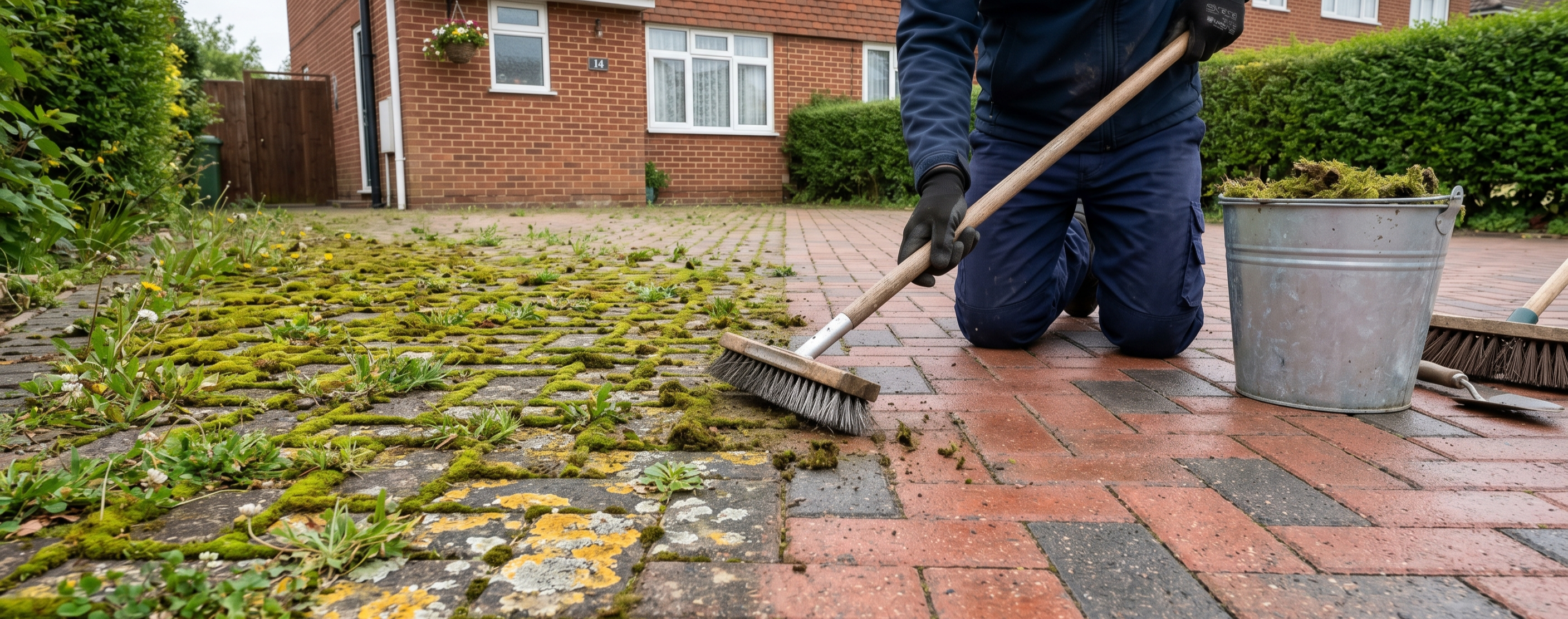
A visual comparison of a mossy, weed-infested block paving driveway next to a freshly cleaned section in the UK.
  • par Sam Marriott

Restauration de pavés autobloquants : Élimination de la mousse, des mauvaises herbes et du lichen
Le pavage est le choix le plus populaire pour les allées au Royaume-Uni, mais il présente un défaut de conception majeur : Les joints. Ces milliers d'espaces entre les briques sont le terreau idéal pour les mauvaises herbes, la mousse...

Plus

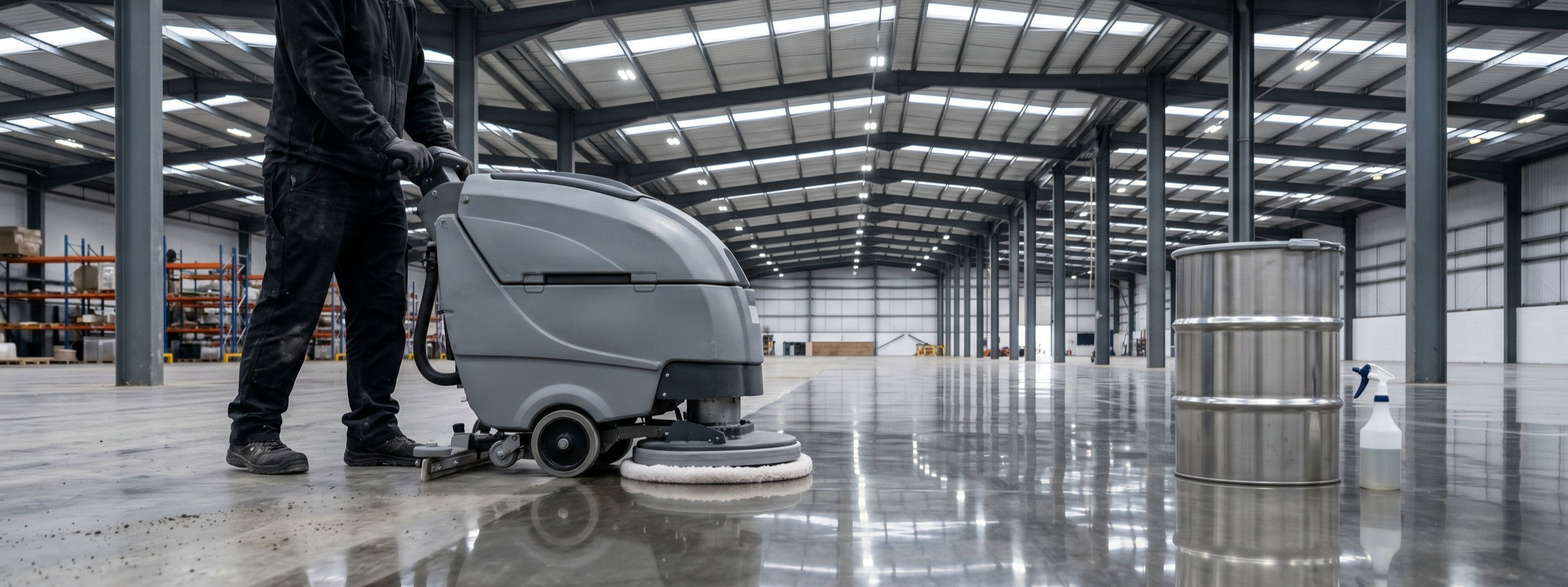
An unbranded industrial floor scrubber being used to maintain the high-gloss shine on a polished concrete warehouse floor.
  • par Sam Marriott

Nettoyer en profondeur le béton poli sans ternir sa brillance
Le béton poli est souvent vendu comme l'option de revêtement de sol "sans entretien". C'est un mensonge. Oui, il est incroyablement durable. Il ne s'écaillera pas comme de la peinture. Mais si vous l'ignorez, ou pire – si vous le...

Plus

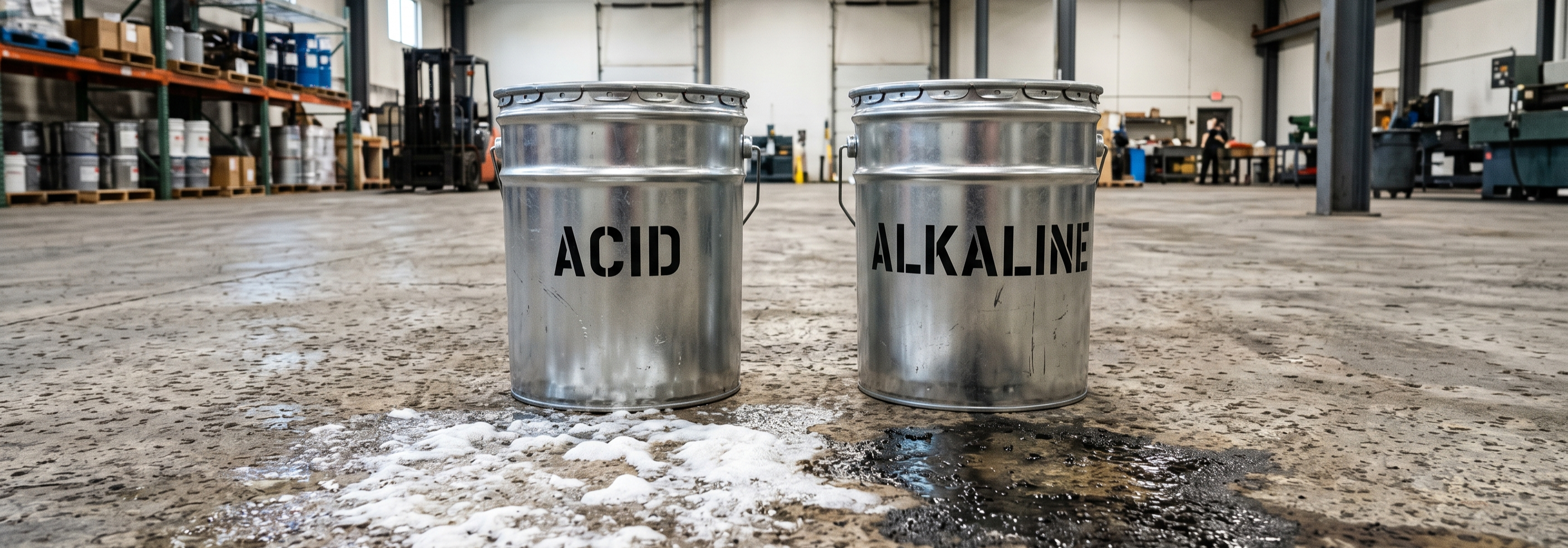
Two unbranded silver tins labeled Acid and Alkaline on an industrial concrete warehouse floor.
  • par Sam Marriott

Nettoyants pour béton acides ou alcalins : Lequel est le meilleur pour votre sol ?

Si vous entrez dans une quincaillerie et demandez un "nettoyant à béton", vous vous retrouverez probablement avec plusieurs options devant vous. La plupart des gens choisissent la bouteille avec l'étiquette d'avertissement la plus agressive, pensant que "plus c'est fort, mieux...

Plus

How to Sand a Painted Concrete Floor for Recoating
  • par Sam Marriott

Comment poncer un sol en béton peint avant de le repeindre

Dans notre guide Ponçage vs. Meulage : Préparation du béton précédemment peint, nous avons établi que si votre sol réussit le test d'adhérence par quadrillage, l'étape suivante pour un nouveau revêtement sera le ponçage. Choisir de poncer plutôt que de meuler vous fait économiser des centaines de livres...

Plus

FAQ

Veuillez consulter notre page FAQ pour en savoir plus.

Do I need a primer?
Yes, on bare concrete. Prime the full area first and allow the primer to take up before mixing any TractionCoat. Over existing floor paint that is sound and well bonded, no primer is required, but the paint must be firmly adhered and free of dust, oil and grease. On metal, run an adhesion trial before coating the whole area.
How many coats does it need?
One. The coating is applied at 220 microns wet, and because it is 100% solids nothing evaporates, so that same 220 microns remains as dry film. If you do choose to apply a further coat, put it on within 48 hours at 20°C.
How long do I have once it is mixed?
Pot life is 30 minutes at 20°C. Heat shortens it, so keep unopened containers out of direct sunlight and away from hot areas before you start. Mix a full unit at 3.55 : 1, get it out on the floor, then mix the next. Do not thin the material to buy working time.
Can I use it outdoors?
Yes — it is suitable for interior and exterior use. Apply between 12°C and 30°C and do not coat below 12°C. Keep the fresh film out of strong sunlight until it has fully cured, as UV exposure before full cure makes discolouration more likely.
When can the floor be used again, and how do I clean up?
The film cures in 16 hours at 20°C. Cure is a chemical reaction between resin and hardener, so it does not depend on ventilation or air movement. Applicators cannot practically be cleaned once epoxy is in them — discard brushes and rollers after use.

Vous n'avez pas trouvé votre réponse ?

N'hésitez pas à nous contacter